
ICT International

Apogee Quantum Light Pollution Sensor

Quantum Light Pollution Sensor for controlled environment horticulture and research applications

Page Contents

Measuring light pollution, the Apogee quantum light pollution sensors detect the stray light that affects plants. Trace amounts of stray light occur in the range of 340-1040nm, caused by sources including signs and infrared security cameras. And this detection ability  makes it helpful for preventing morphogenic effects, such as hermaphrodism, stem elongation, and poor flowering in sensitive plants. Available in package and sensor options, with sensors available with unamplified, amplified, 4-20mA or SDI-12 outputs. Full technical specifications can be found on the Apogee Instruments Website Accessories can be found on the Apogee Accessories page
SQ-640 Light Pollution Sensor

Versions available

Portable

  • PQ-640: Light pollution PFD monitoring package with AT-100 microCache and SQ-640-SS sensor head with 30 cm cable lead and connector.

Sensors (with 5m cable and connector)

  • SQ-640-SS: Extended range light pollution/low light PFD sensor for LEDs, unamplified.
  • SQ-642-SS: Extended range light pollution/low light PFD sensor for LEDs, 0-2.5V DC output.
  • SQ-644-SS: Extended range light pollution/low light PFD sensor for LEDs, 4-20mA output.
  • SQ-645-SS: Extended range light pollution/low light PFD sensor for LEDs, 0-5V DC output.
  • SQ-647-SS: Extended range light pollution/low light PFD sensor for LEDs, digital SDI-12 output.

Full technical specifications can be found on the Apogee Instruments Website

Accessories can be found on the Apogee Accessories page

Case Studies

  • No case studies found

Accessories
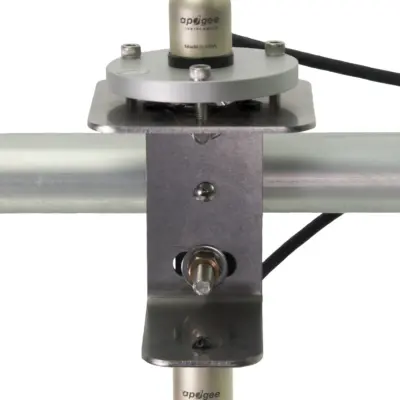
  • AL-130 Apogee albedometer mounting bracket in use

    Apogee Accessories

    Select options This product has multiple variants. The options may be chosen on the product page
  • Apogee microCache Bluetooth logger

    Apogee microCache Bluetooth logger

  • Meet with our scientists

    Discuss your requirements with ICT International